

What is GMP? A Complete Beginner-Friendly Guide to Grey Market Premium (2025)
Introduction
When an IPO opens in India, the very first number retail traders look at is the GMP — Grey Market Premium.
But what exactly is GMP? Why does it move every day? Why does everyone on Telegram and YouTube talk about it like it’s a prediction machine?
In this easy, beginner-friendly guide, we’ll break down GMP using simple examples, analogies, and real Indian IPO cases — so you understand it exactly like a pro.
What is GMP?
GMP (Grey Market Premium) is the unofficial price at which IPO shares are traded before listing, in an unregulated market outside the stock exchange.
👉 In simple words: GMP = Extra price traders are willing to pay before listing because they expect the stock to list higher.
If an IPO has:
- Issue Price: ₹100
- GMP: ₹50
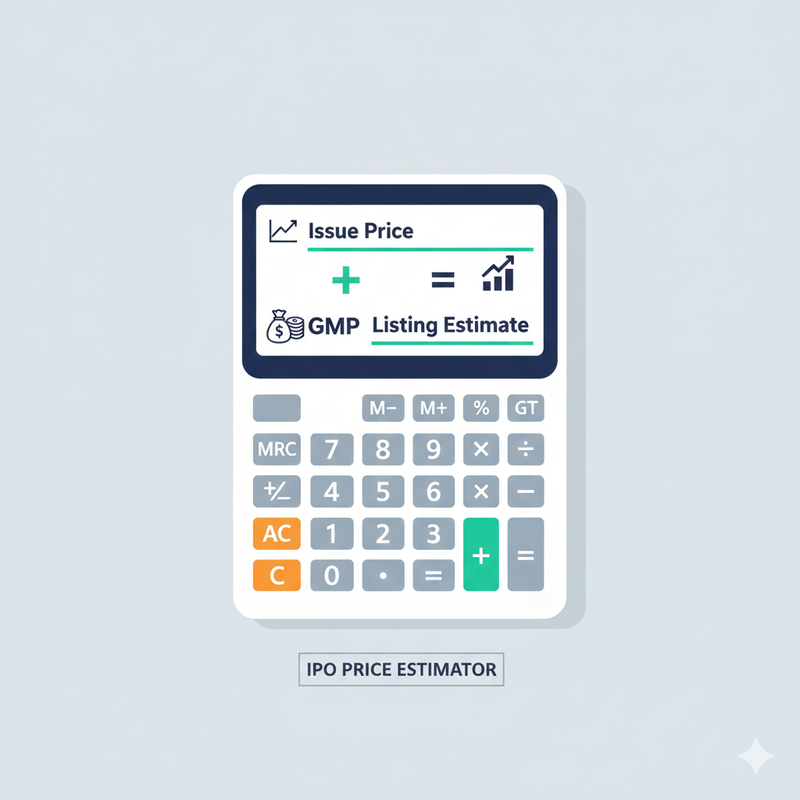
Then the expected listing price becomes:
₹100 + ₹50 = ₹150
This is why traders love tracking GMP — it gives an early signal about listing gain expectations.
How Does GMP Work? (Explained Like a Story)
Imagine a new bakery in your city is opening, offering special “membership passes”.
Only limited passes exist. People want them. Some are confident the bakery will be a hit.
So a private buyer tells you:
“If you get one pass for ₹500, I will buy it from you immediately for ₹650.”
Here:
- ₹500 = Issue Price
- ₹650 – ₹500 = ₹150 GMP
Just like this, in IPOs:
- Dealers
- HNI traders
- Small groups
trade IPO applications or shares before listing, creating a premium.
This is called the Grey Market — unregulated, unofficial, but widely watched.
Types of Grey Market Activity
1. GMP Trading (Premium Trading)
People trade the expected listing price difference.
Example: You apply for shares. A dealer offers ₹70 per share GMP. If you get allotment, you must sell to him at listing.
2. Kostak Rate
Premium for buying your entire IPO application.
Example: “Kostak ₹450” means:
A dealer will pay you ₹450 even if you don't get allotment.
3. Subject to Sauda
A deal valid only if allotment happens.
Example: “Subject to sauda ₹7500” If you get allotment → dealer pays ₹7500.
Why Do Investors Track GMP?
Because GMP often signals:
✅ 1. Market Sentiment
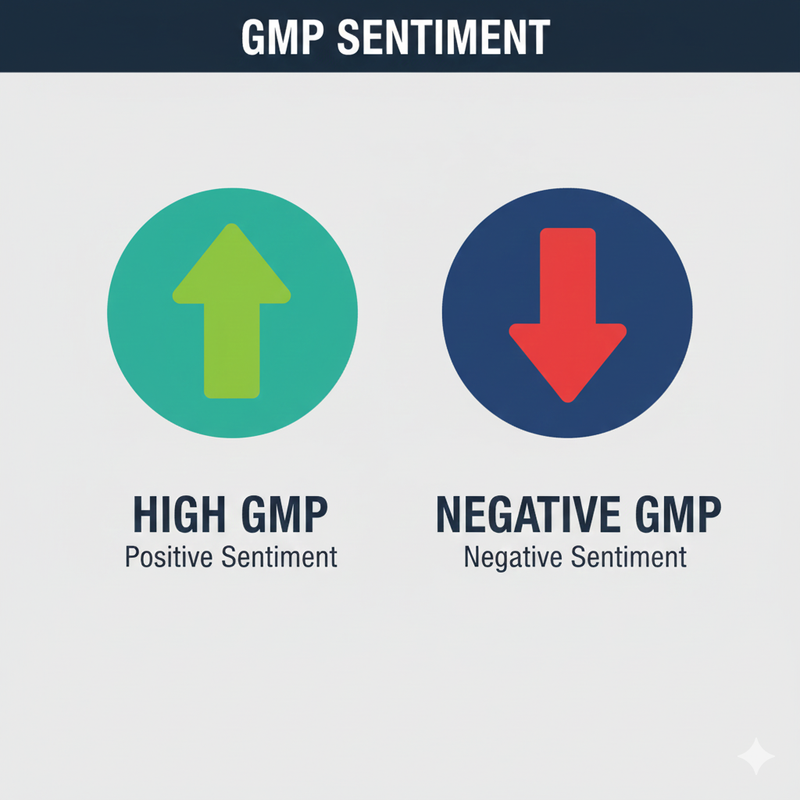
High GMP = High demand Low GMP = Low interest Negative GMP = Risky or expected weak listing
✅ 2. Expected Listing Gains
GMP directly shows estimated listing price.
✅ 3. HNI & QIB Demand Expectations
A strong GMP usually means strong bidding in HNI/QIB categories.
How Reliable is GMP? (Truth Most Beginners Don’t Know)
GMP is NOT always accurate.
It changes due to:
- Market volatility
- Operator activity
- Global cues
- Subscription numbers
- Fake hype (Telegram influencers)
Real Truth:
👉 GMP is just sentiment, not a guaranteed prediction.
Some IPOs showed huge GMP but listed flat. Some had low GMP but gave strong listing gains.
Real-Life Indian Example: Zomato IPO
- Issue Price: ₹76
- Grey Market Premium: ~₹15–18
- Expected Listing: ~₹90
- Actual Listing: ₹116 (53% gain)
Even with a modest GMP, Zomato surprised everyone.
This proves: Market fundamentals + demand > GMP
(This real example is perfect to include as you requested.)
How to Calculate Estimated Listing Price
Estimated Listing Price = Issue Price + GMP
Example: Issue Price: ₹300 GMP: ₹85
➡️ Expected Listing: ₹385
You can calculate this instantly using: 👉 GAINIPO Listing Gain Calculator
Should Retail Investors Make Decisions Based on GMP?
Use GMP to understand sentiment, not to decide investment.
Good IPO strategy:
✔️ Read DRHP summary ✔️ Check financials ✔️ Look at peer comparison ✔️ Check subscription status ✔️ Track GMP as a secondary factor
Never apply only because “GMP high hai”.
Conclusion
GMP is an exciting part of the IPO ecosystem because it gives quick insight into market mood. But investors must remember:
- It is unofficial
- It is sentiment-driven
- It is not regulated
- It is not a guarantee
Track GMP daily — but invest wisely.
GAINIPO gives updated, fast, clean GMP data so retail investors always stay one step ahead. Check out the Live GMP Today page for the latest updates.
FAQs
1. Is GMP legal in India?
GMP is unofficial and happens outside exchanges. It's not illegal, but it's unregulated.
2. How often does GMP change?
GMP can move multiple times a day depending on demand and market mood.
3. Does high GMP guarantee listing gains?
No. High GMP only signals sentiment, not certainty.
4. What is a good GMP for listing profit?
Anything above 20–30% of issue price is considered strong.
5. Can GMP go negative?
Yes. Negative GMP indicates expected listing below issue price.
6. What are Kostak and Subject to Sauda?
They are grey market deals for IPO applications before allotment.
7. Where can I check reliable GMP?
👉 Visit GAINIPO GMP Today page for real-time updates.